

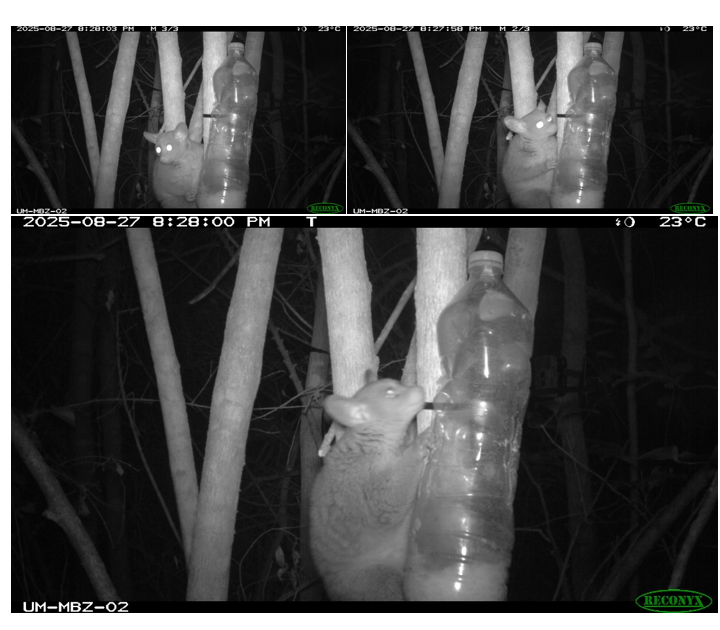
Our team from the Tanzania Research and Conservation Organization (TRCO) recently carried out fieldwork in the Ruvu South and Pugu-Kazimzumbwi Forest Reserves to search for the critically endangered Rondo dwarf Galago (Galagoides rondoensis). The work aimed to document its presence, understand habitat use, and assess threats affecting this little-known primate.
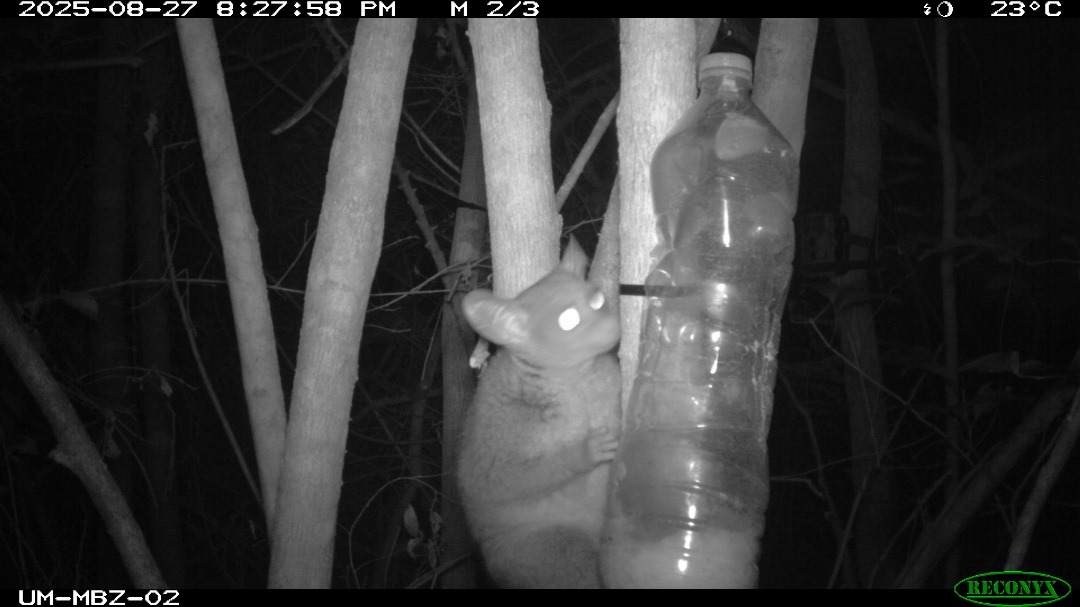
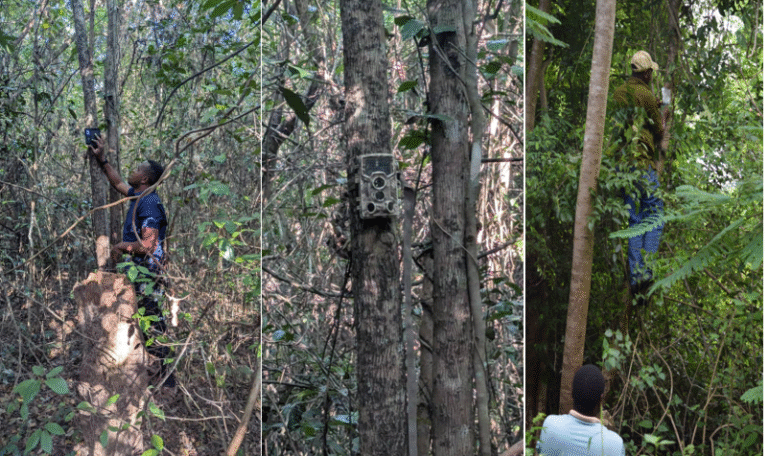
Over several weeks, we worked deep in the forest, combining passive acoustic monitoring with playback calls and camera traps. Seven transects were established across both reserves, and at intervals of 250 meters, we placed AudioMoth recorders to capture the sounds of the forest from dusk to dawn. Playback calls were used to attract and confirm Galago responses, while camera traps were set at key points to record their activity.
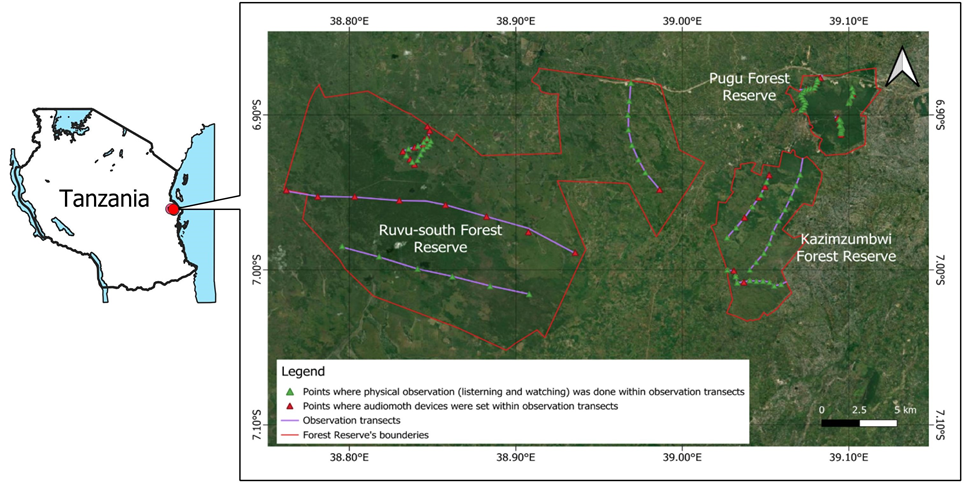
Every evening, as the light faded and the forest filled with the hum of insects and frogs, our team quietly moved along the transects, setting up equipment and checking devices late into the night. The Rondo dwarf Galago, small and elusive, often revealed its presence only through faint calls echoing from the canopy.
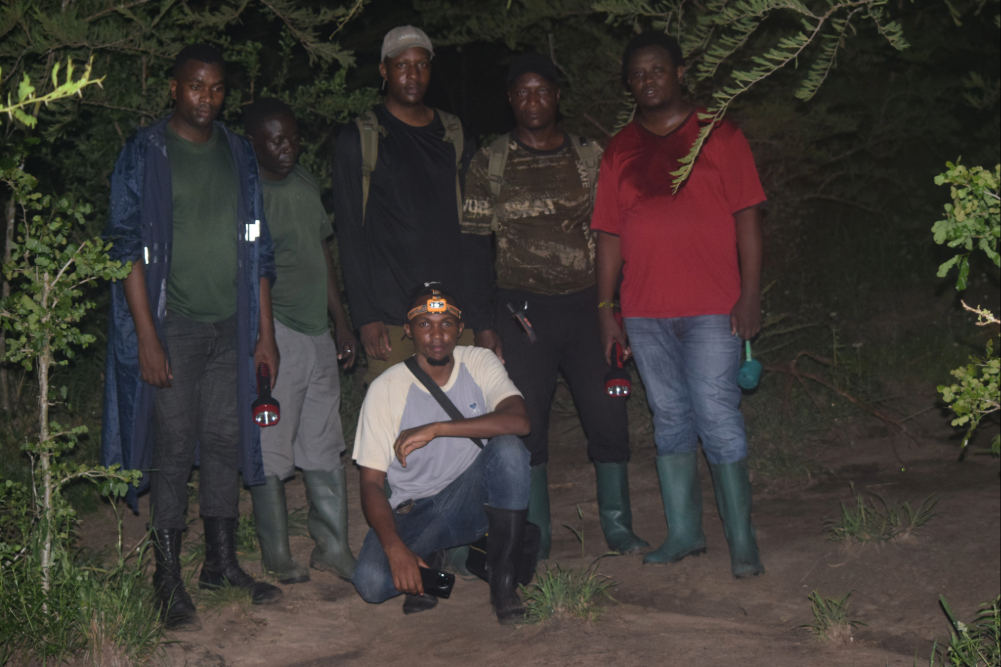
The field team on-site in Ruvu South and Pugu-Kazimzumbwi Forest Reserves, studying the endangered Rondo dwarf Galago.
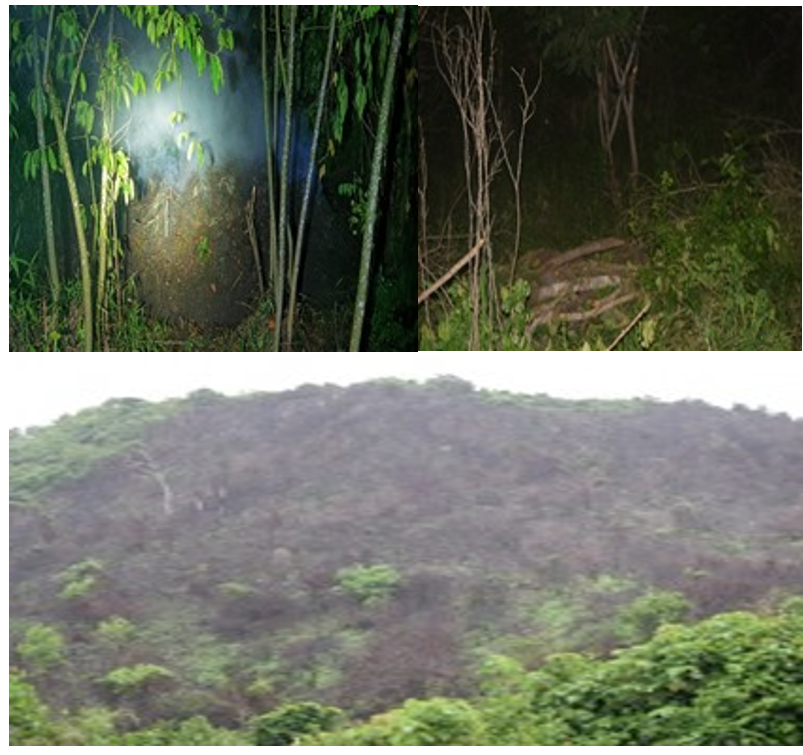
The surveys also revealed the many challenges facing these forests. Dense vegetation made movement difficult, and in several areas we observed signs of illegal logging, charcoal production, and small-scale agriculture close to the reserve boundaries. Such human activities threaten the survival of species like the Rondo dwarf Galago, whose range is already limited to a few forest fragments along Tanzania’s coast.
During informal discussions, we learned that most local community members and field assistants had little knowledge of this species or its conservation importance. This showed the need to strengthen community awareness and involvement in protecting forest habitats and the wildlife they shelter.
This fieldwork formed part of TRCO’s broader goal to improve understanding and conservation of Tanzania’s rare and threatened species. It demonstrated the value of acoustic methods in monitoring nocturnal primates and highlighted areas requiring further research, particularly during the dry season.
We extend our sincere gratitude to the International Bank for Reconstruction and Development, under Re:wild’s Fonseca Leadership Program Global Field Grants for funding this work. TRCO warmly welcomes partnerships and individuals interested in supporting research and conservation efforts for the Rondo dwarf Galago and its unique forest habitat. For collaboration or partnership inquiries, please contact us at info@trco.or.tz