

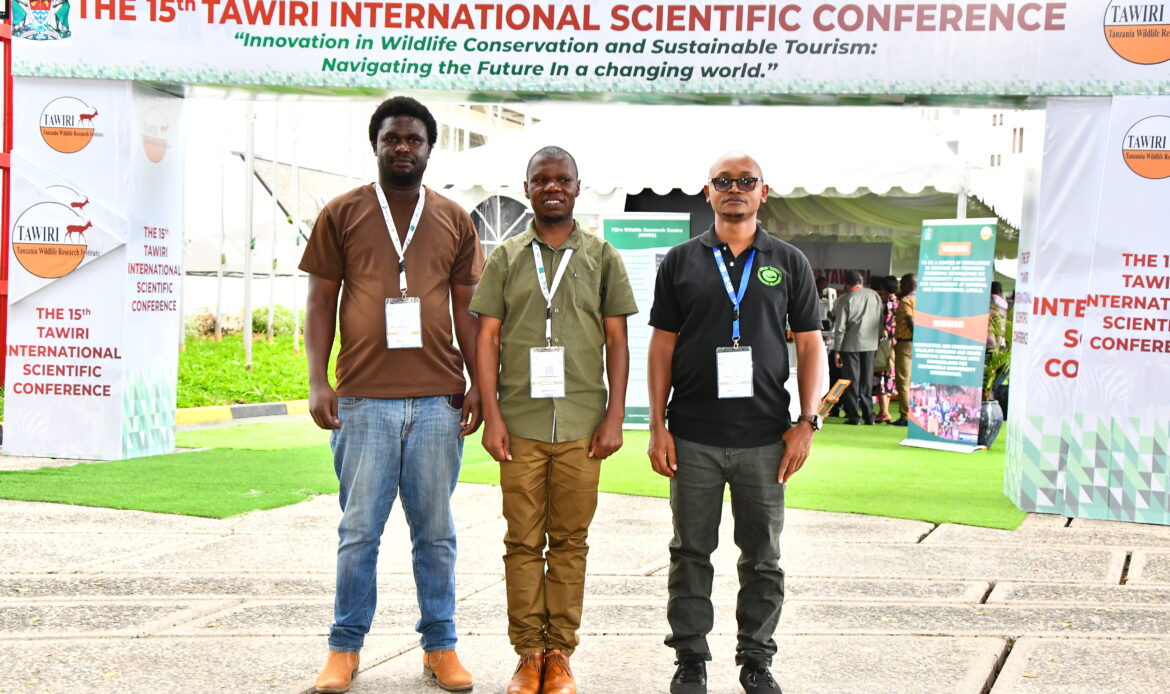
From 3rd to 5th December, the Tanzania Research and Conservation Organization (TRCO) participated in the 15th TAWIRI International Scientific Conference, held at the Arusha International Conference Centre (AICC). The conference brought together leading conservation scientists, practitioners, and policymakers from Tanzania and across the globe, providing a vital platform for learning, collaboration, and knowledge exchange on biodiversity conservation.
TRCO was proud to contribute to this global scientific dialogue by sharing research insights from across Tanzania’s diverse landscapes, while also learning from ongoing conservation and research initiatives led by others.
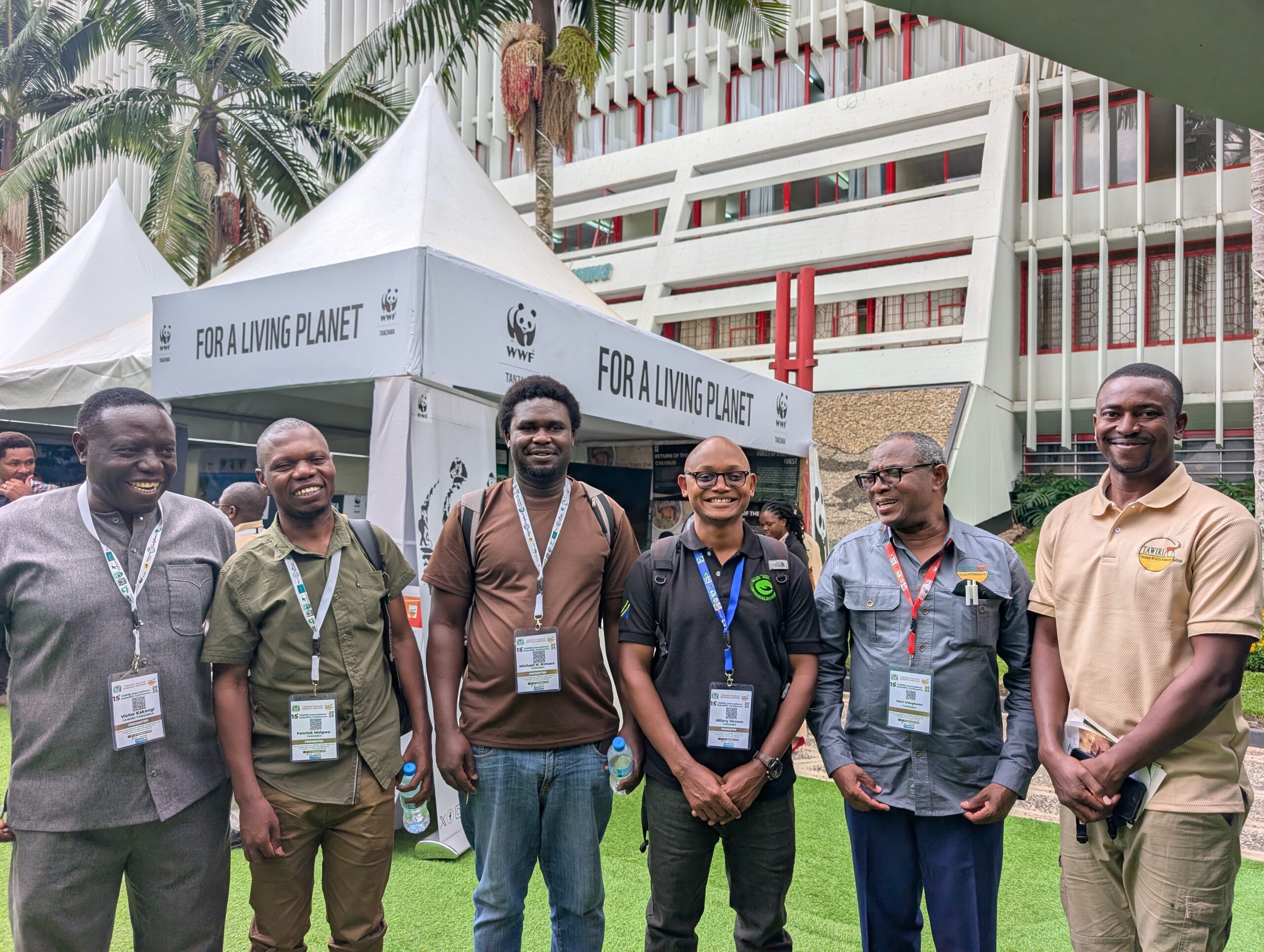
TRCO Research Contributions
During the conference, TRCO researchers presented findings from ongoing studies addressing critical conservation challenges affecting elephants, pangolins, and giraffe species facing increasing ecological and anthropogenic pressures in multiple Tanzanian landscapes.
Human–Wildlife Conflict and Elephant Conservation
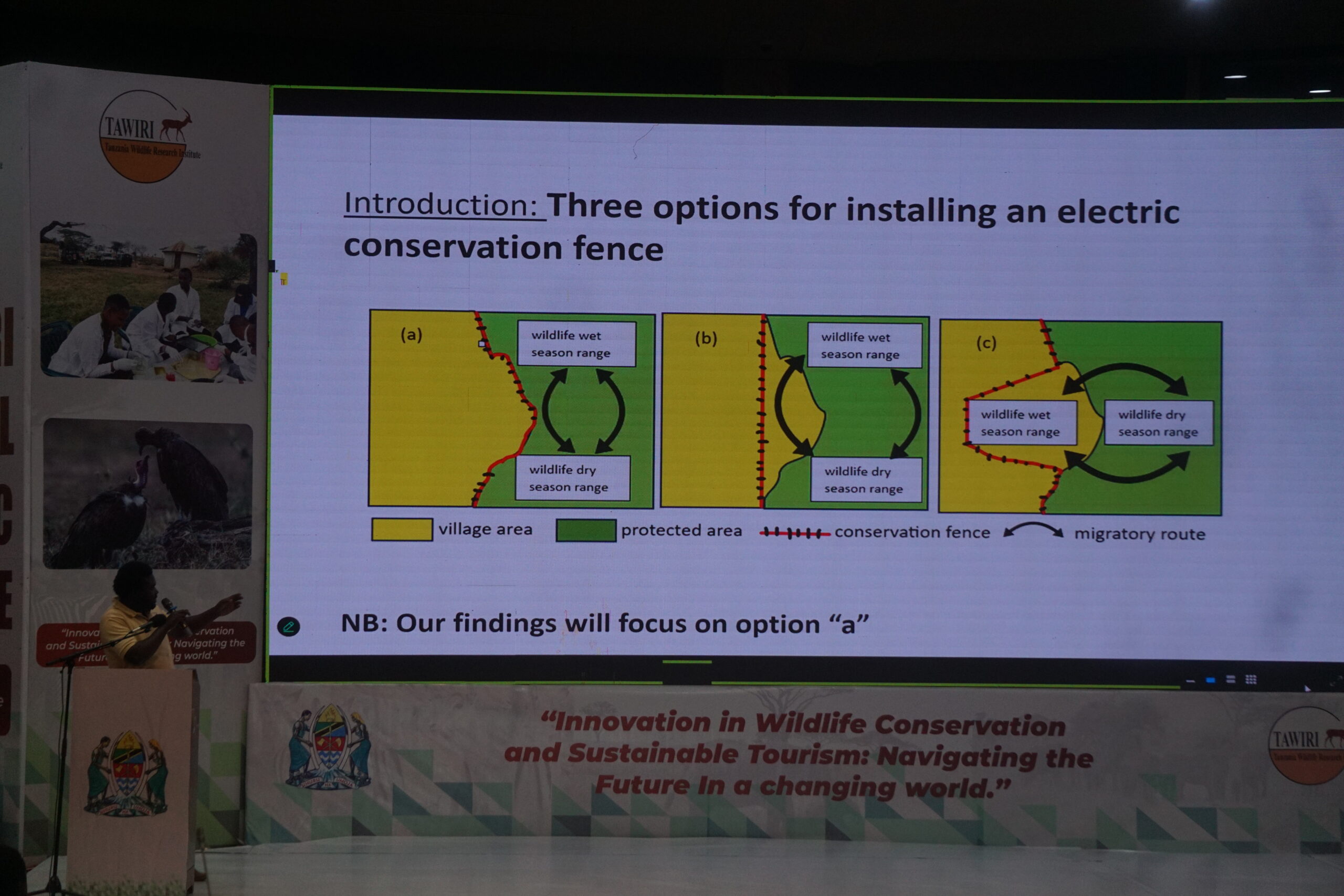
Michael Kimaro presented findings from his PhD research examining the management of human–wildlife conflict along hard protected-area boundaries using electric fencing. His study evaluated the effectiveness of fencing in reducing human–elephant conflict, assessed ecological impacts on vegetation and wildlife movement, and explored community perceptions and support for this mitigation approach.
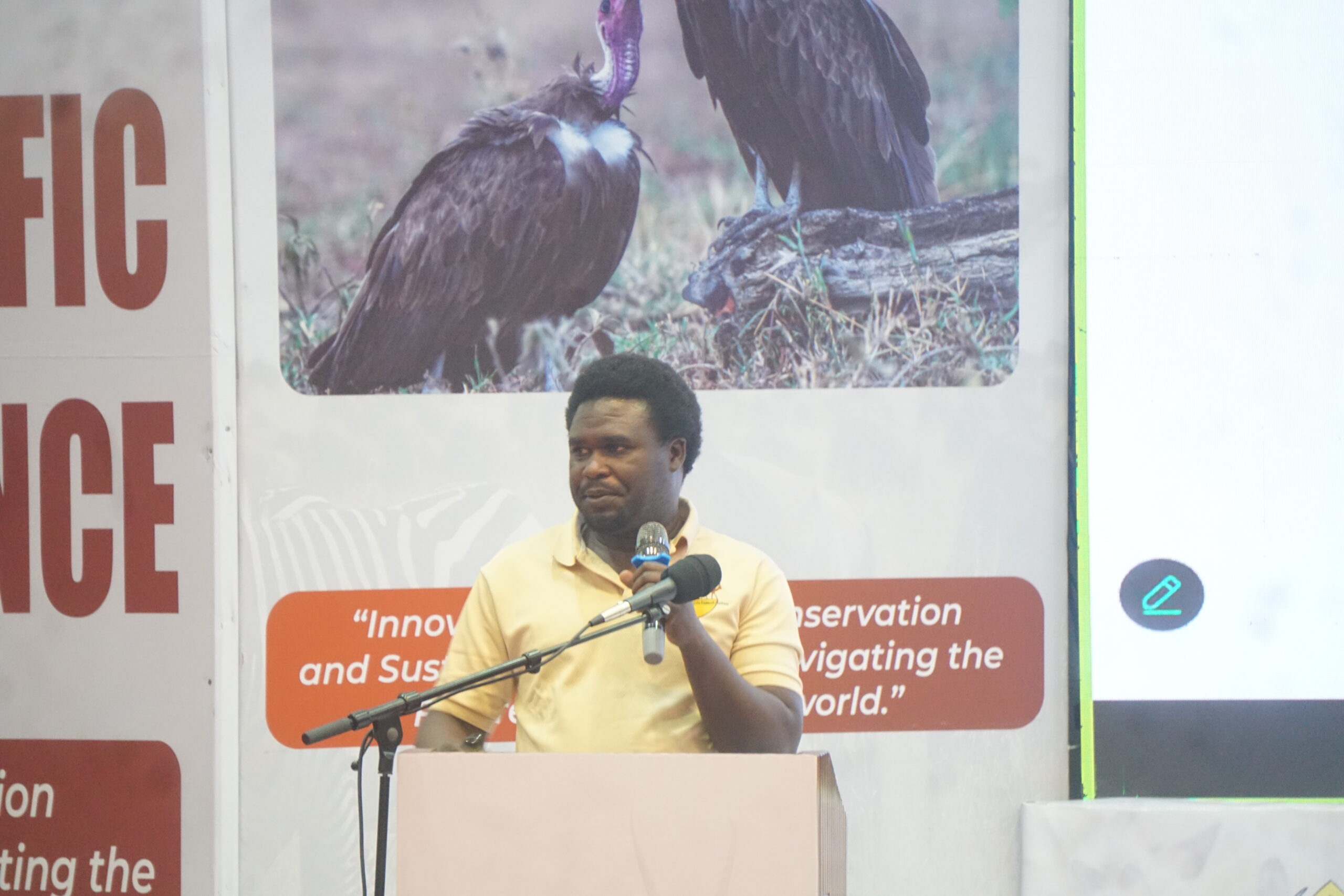
Photo Credit: Hillary Mrosso
In addition, Fenrick Msigwa presented a poster on the socioeconomic impacts of human–elephant conflict in communities bordering Burigi Chato National Park. The poster highlighted livelihood losses, community vulnerabilities, and the urgent need for inclusive and locally grounded coexistence strategies to address escalating elephant incursions.
Pangolin Research and Illegal Wildlife Trade
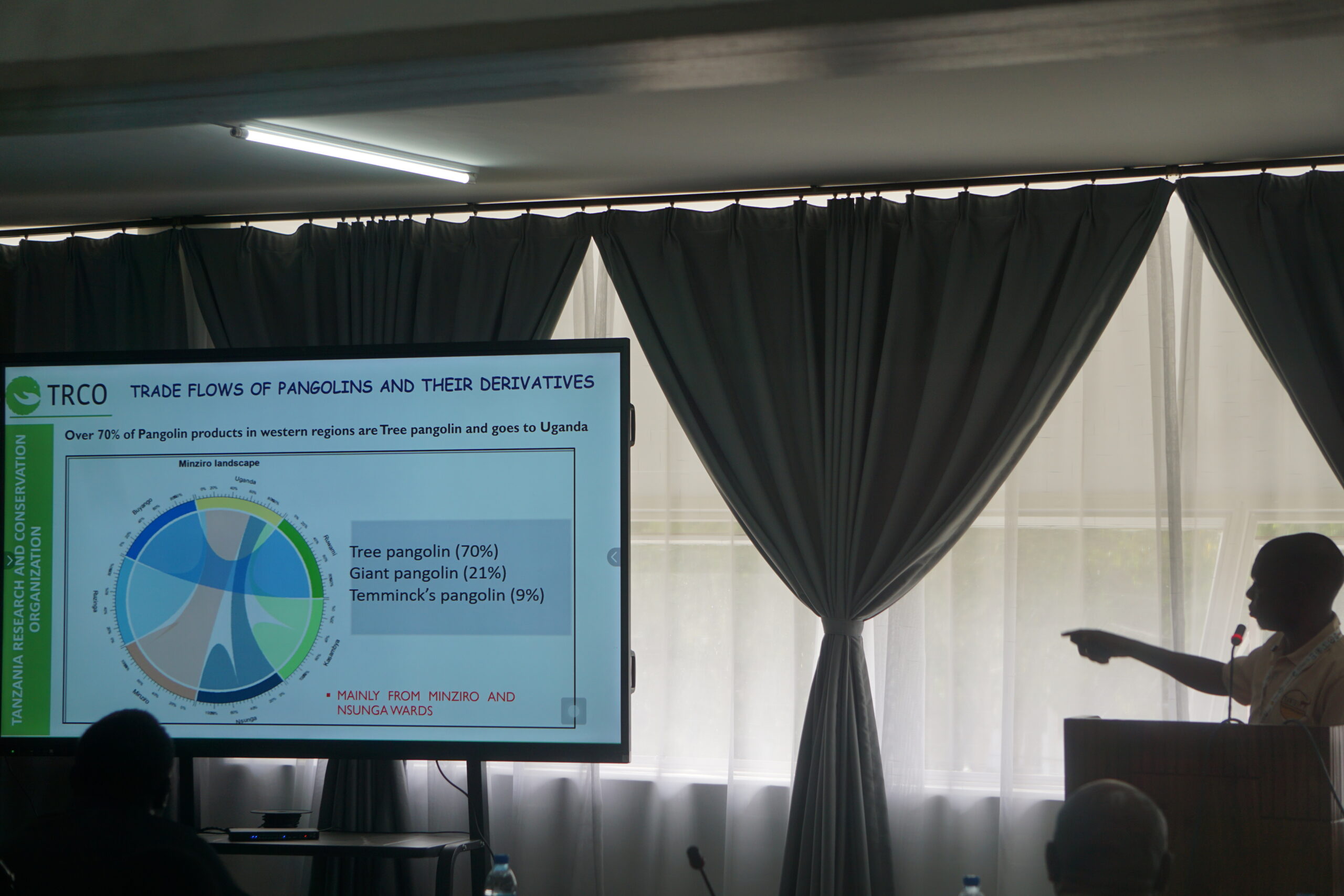
Nnyemo Chilagane shared critical insights on pangolin encounters, utilization, and illegal trade within the Mahale–Gombe–Moyowosi Landscape. The presentation emphasised the importance of shifting local attitudes, strengthening community-led monitoring, improving reporting mechanisms, and enhancing national and cross-border enforcement collaboration.
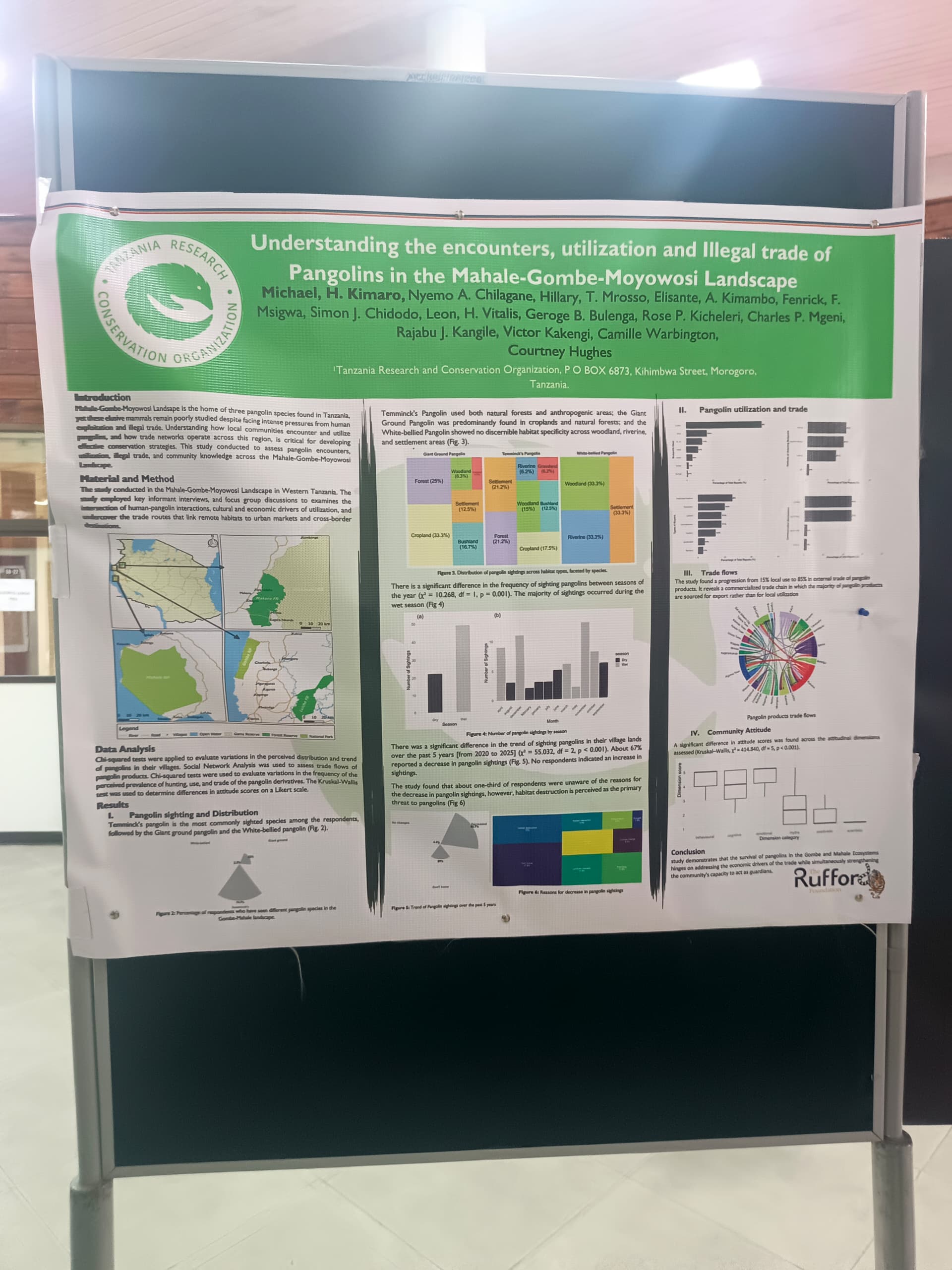
Nyemo also presented work on the hydrological benefits of Nature-based Solutions (NbS) for freshwater resilience in the Mbarali River Catchment, demonstrating the potential of NbS to enhance water availability and ecosystem resilience in data-scarce, semi-arid systems. Scaling such interventions could significantly support climate adaptation, ecosystem services, and food and water security.
Integrating Social and Ecological Data for Pangolin Conservation
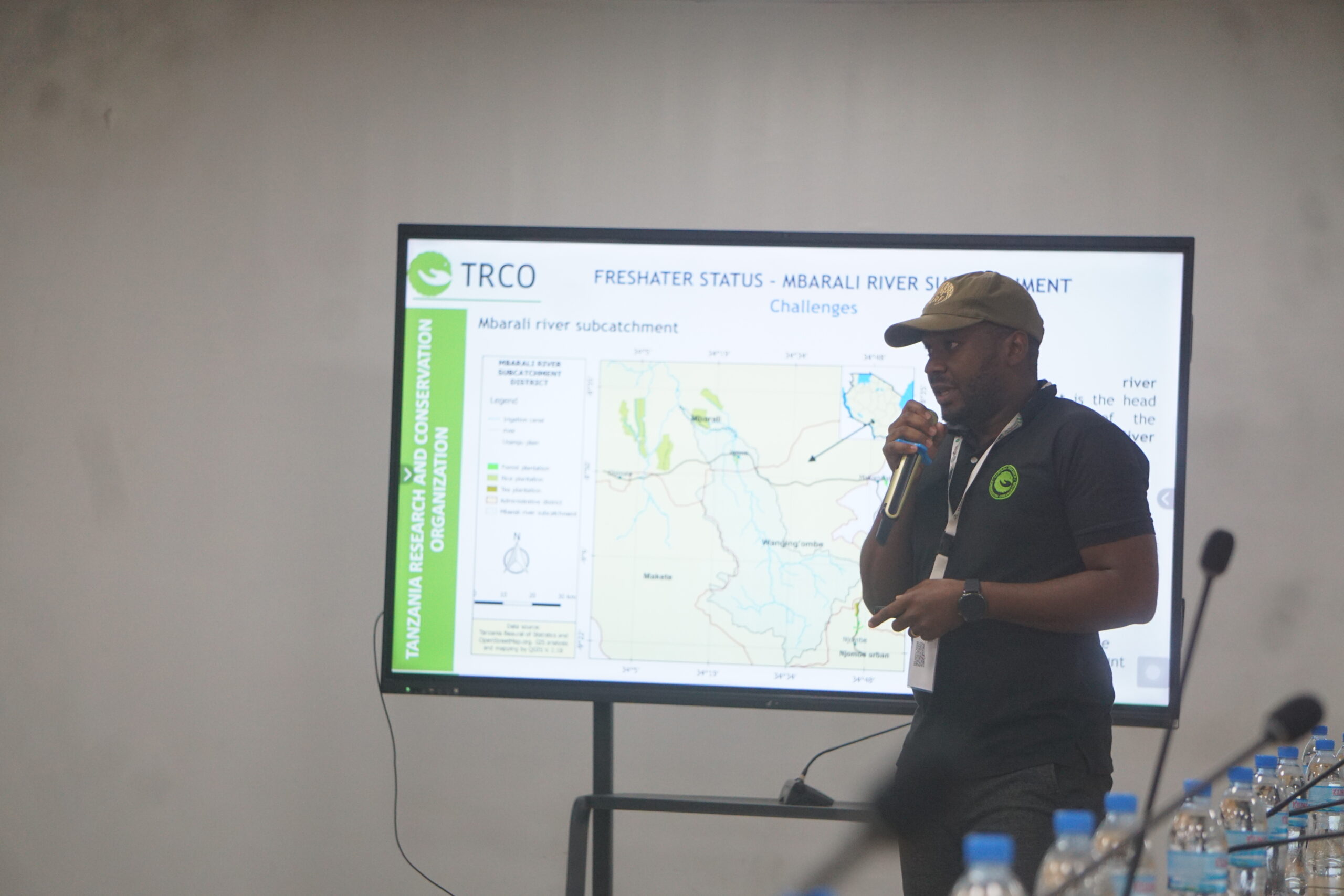
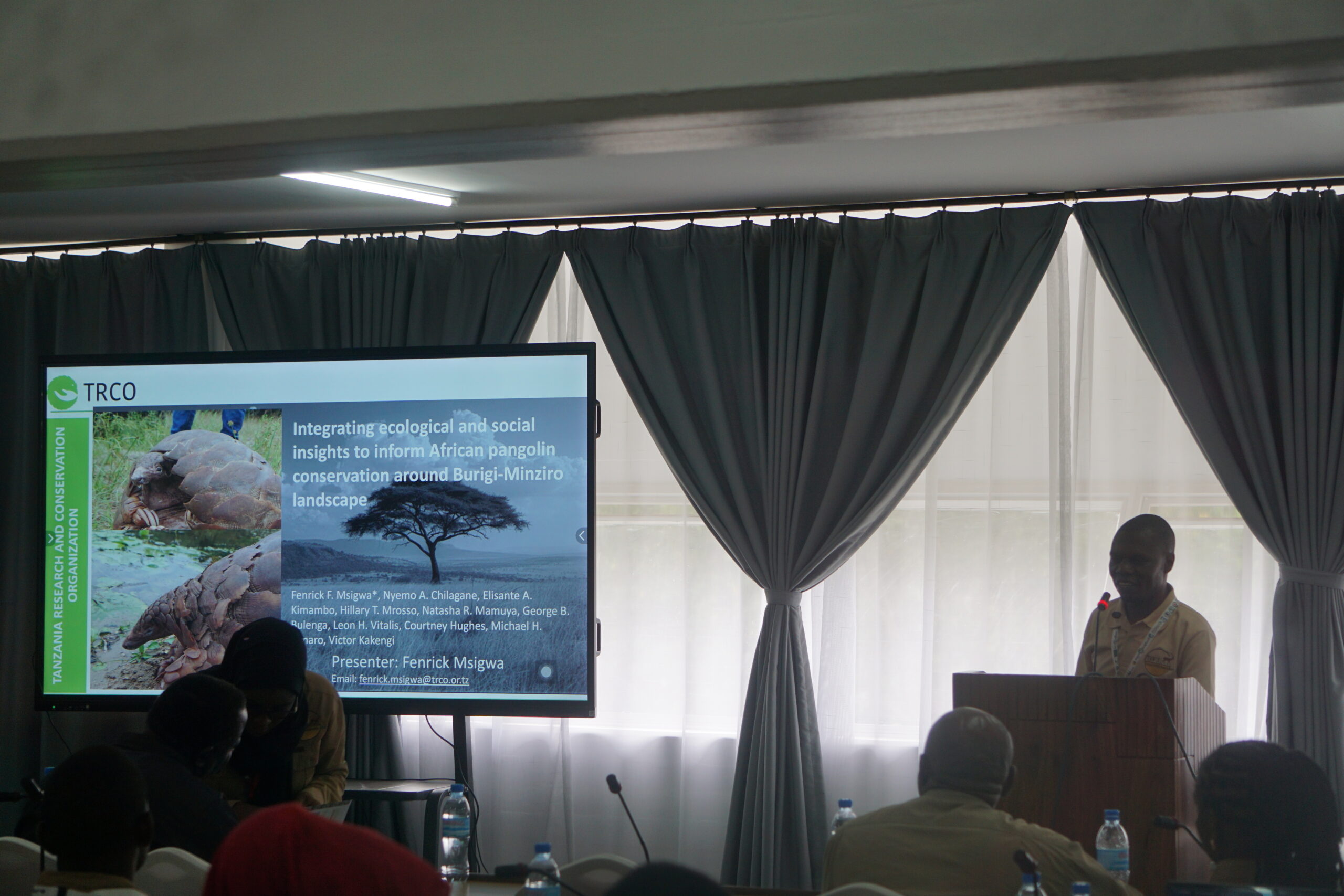
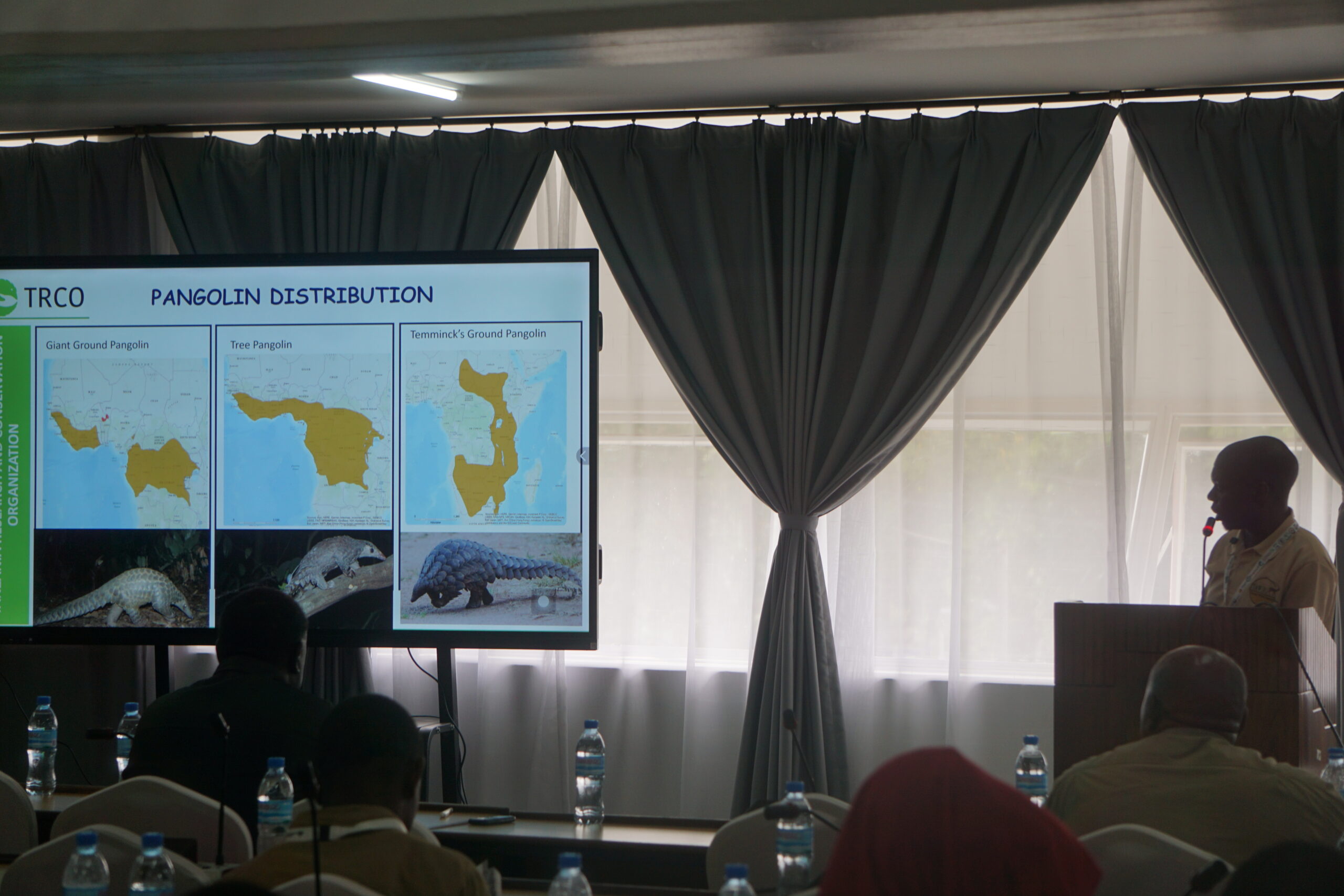
Fenrick Msigwa delivered a talk on integrating ecological and social insights to inform African pangolin conservation in the Burigi–Minziro landscape. The presentation demonstrated how combining ecological data with community knowledge can improve understanding of human–pangolin interactions, support community-led monitoring, guide transboundary anti-trafficking efforts, and contribute to Tanzania’s national pangolin conservation strategy.
Giraffe Conservation Research
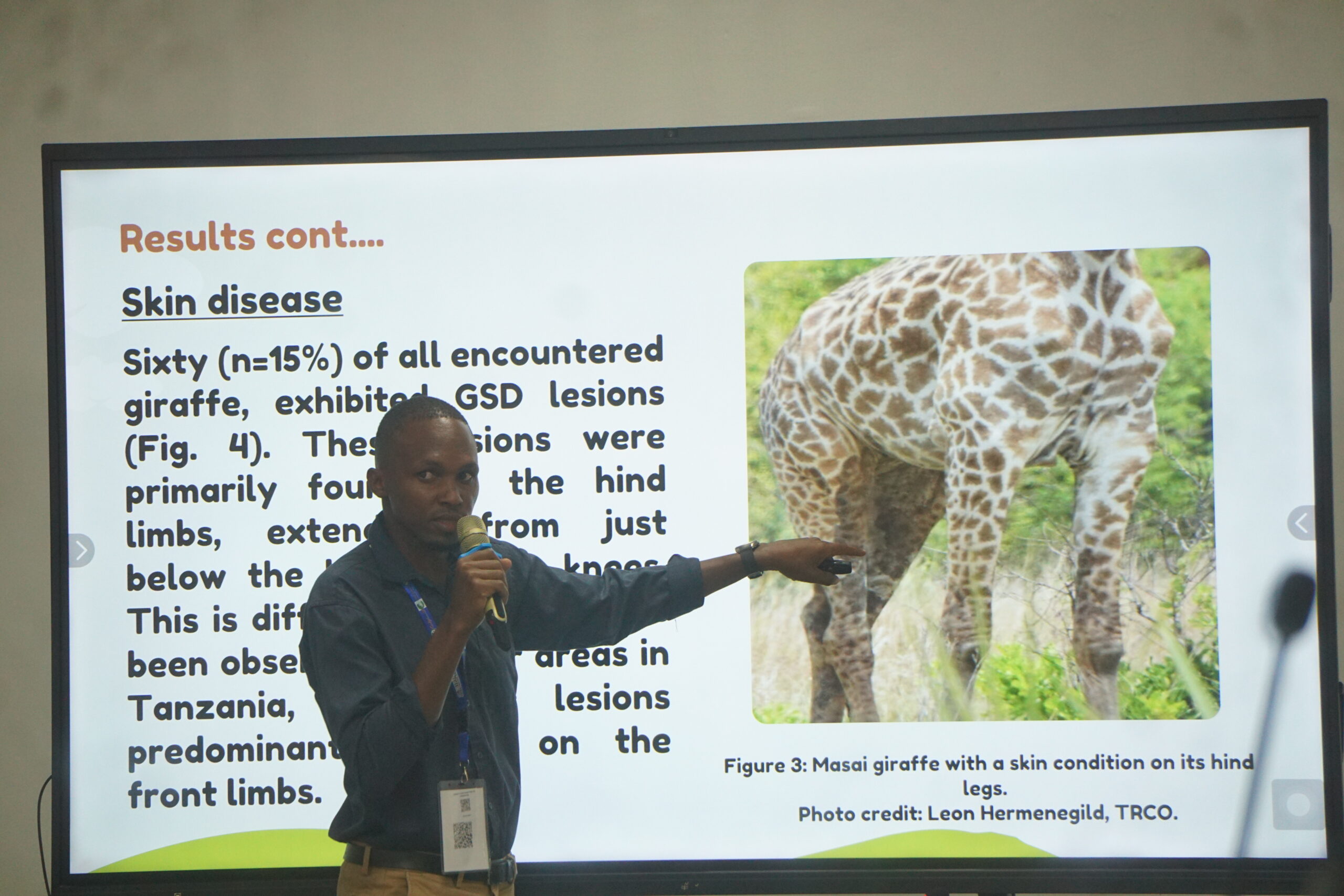
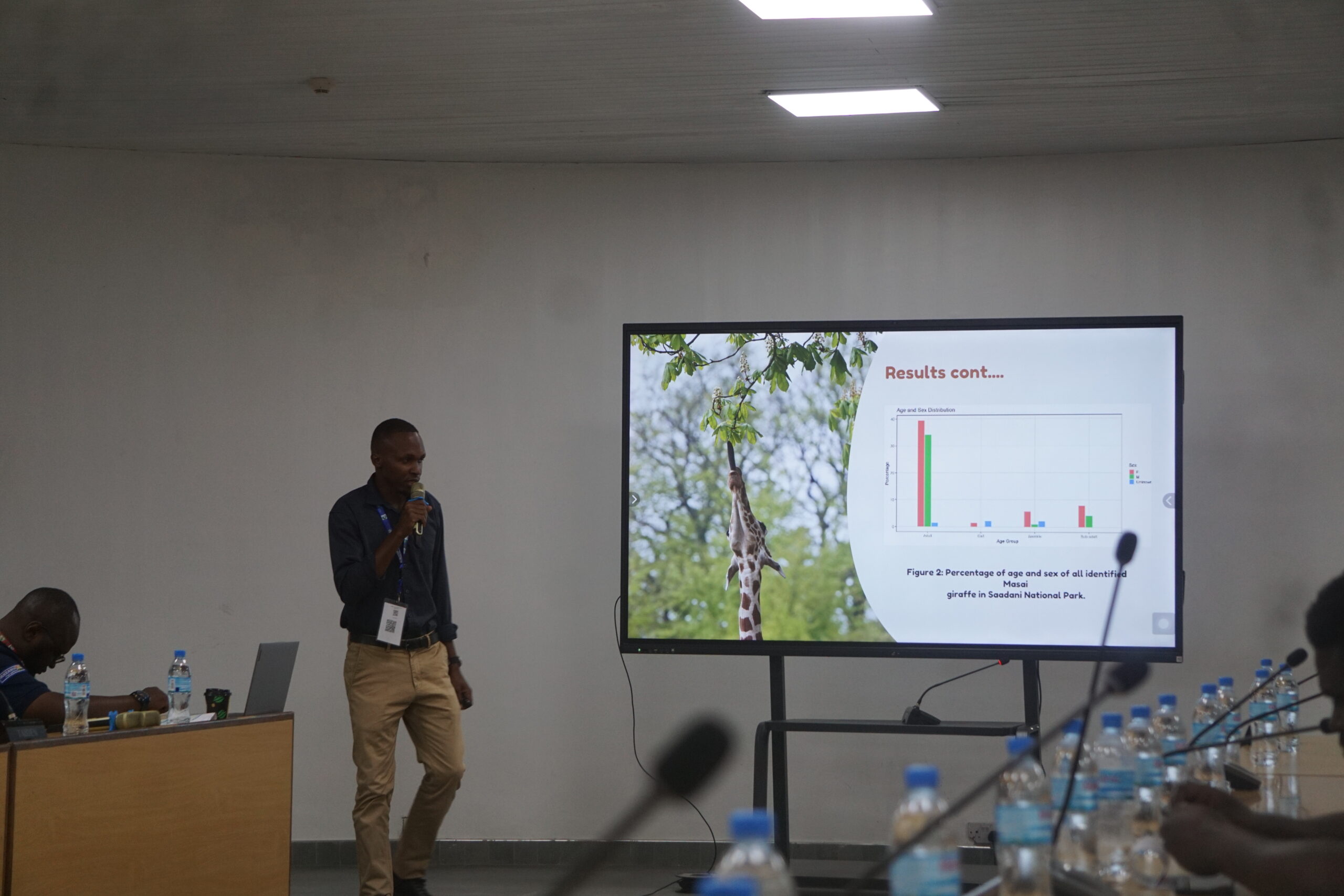
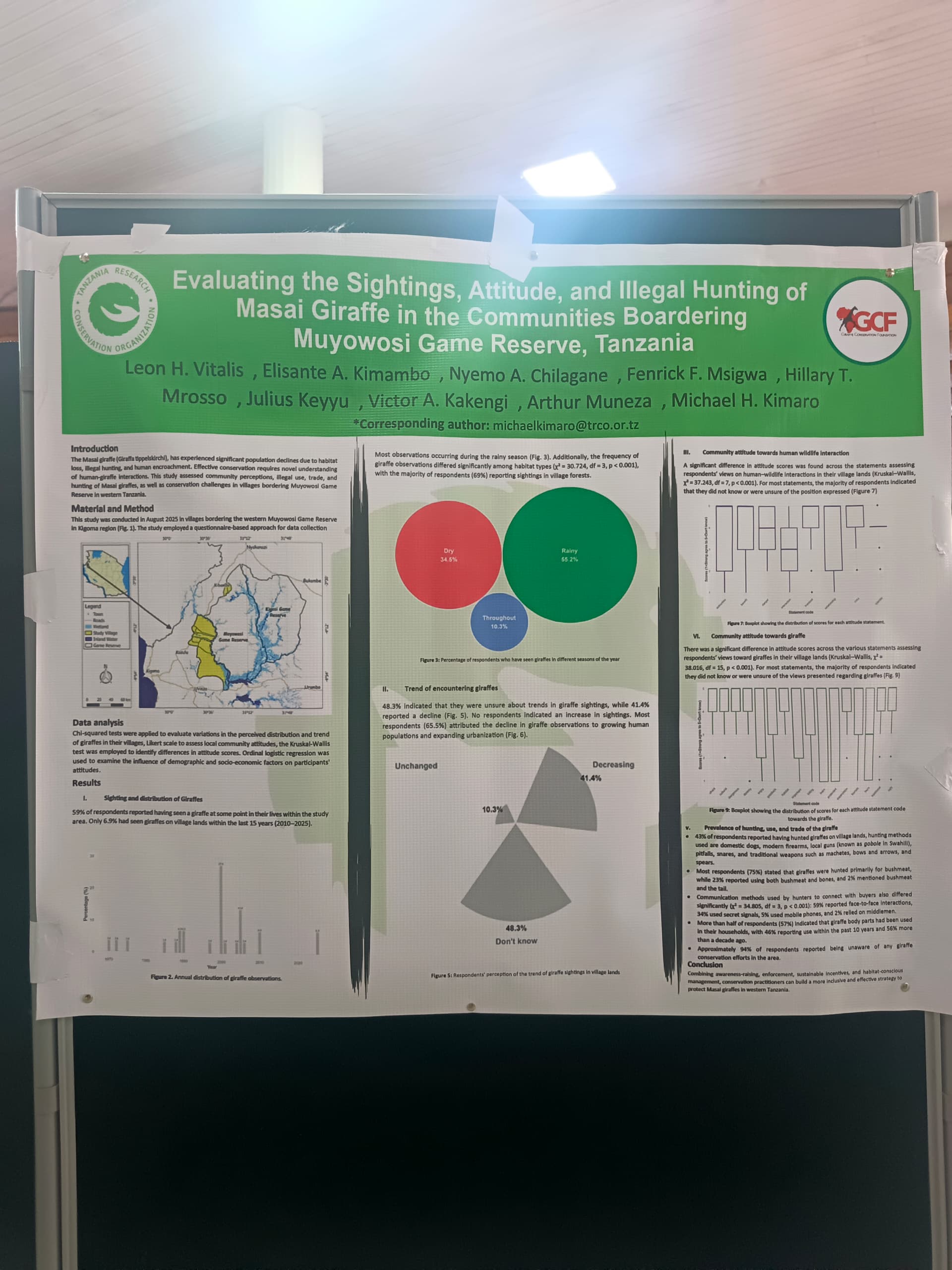
Leon Hermenegild presented research on Maasai giraffe population dynamics, abundance, and predation risks within and around Saadani National Park. Leon also showcased a poster evaluating giraffe sightings, community attitudes, and illegal hunting pressures in villages bordering the Moyowosi Game Reserve, highlighting the importance of community engagement in giraffe conservation.
Landscape Connectivity for Pangolins
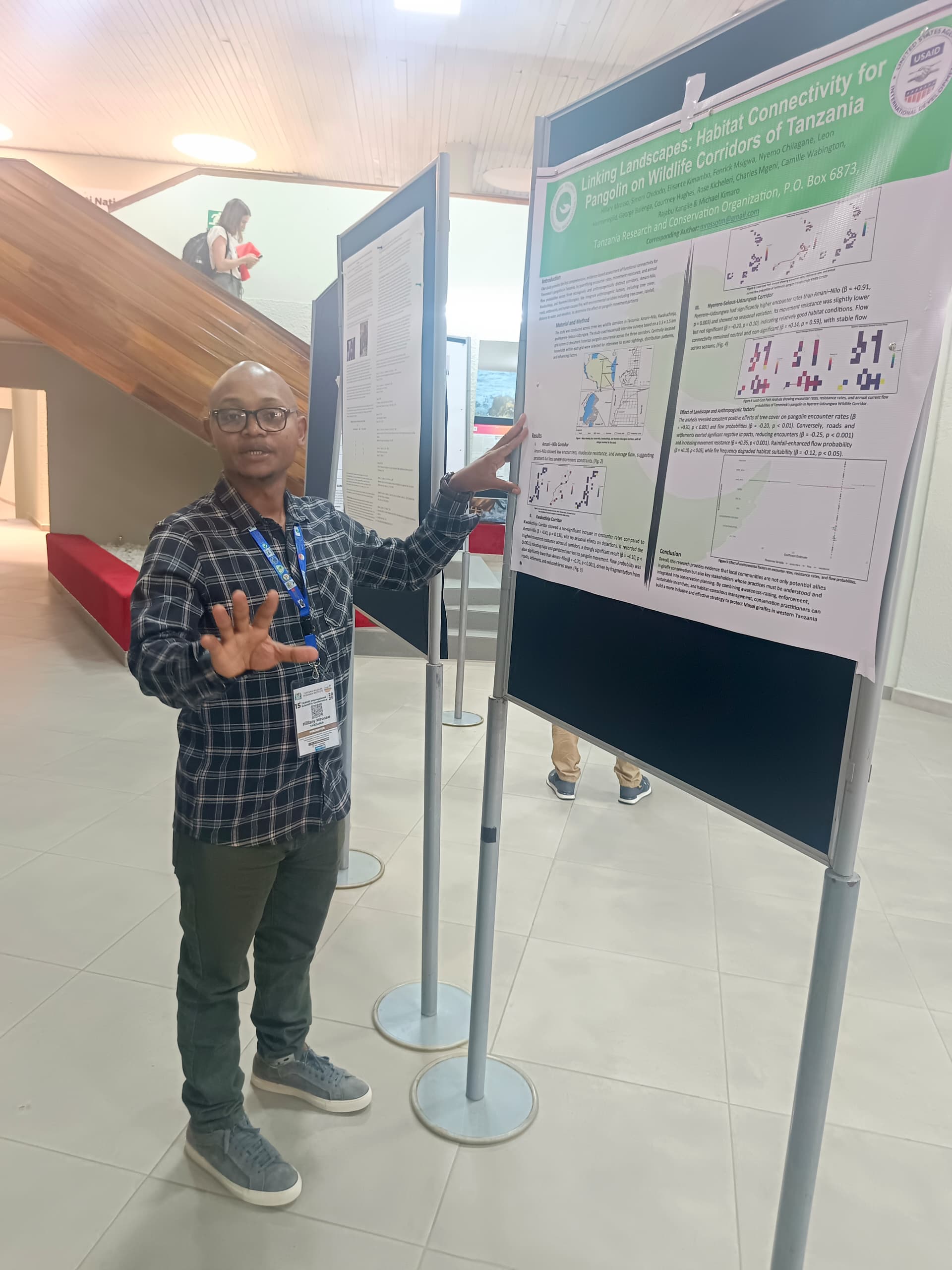
Hillary Mrosso gave a talk titled “Linking Landscapes: Habitat Connectivity for Pangolins in Tanzania, a landscape-scale study mapping functional connectivity for Temminck’s ground pangolin across the Amani–Nilo, Kwakuchinja, and Nyerere–Udzungwa corridors”. The study quantified encounter rates, movement resistance, and annual flow probabilities, providing critical insights for landscape-level conservation planning.
Our Ongoing Commitment
TRCO remains deeply committed to advancing evidence-based conservation science while working closely with communities living alongside protected areas. Addressing human–elephant conflict, strengthening pangolin and giraffe conservation, and improving community livelihoods remain central to our mission. While progress has been made, significant work remains to scale coexistence strategies and expand species-focused research across Tanzania’s landscapes.
Appreciation to Our Partners
We extend our sincere appreciation to our partners and donors who make this work possible, including USAID Tuhifadhi Maliasili Project (2023/2024), the Conservation Leadership Program, the Giraffe Conservation Foundation, the WWF Education for Nature, the Grumeti Fund, and the Rufford Foundation. Your continued support enables TRCO to deliver impactful, science-driven conservation for Tanzania’s wildlife and the communities that share their landscapes.