

Temminck’s pangolin (Smutsia temminckii) is one of Africa’s most fascinating mammals, armored, secretive, and uniquely adapted for life as an ant-eater. Found across eastern and southern Africa, this species is also known as the “ground pangolin” because it spends most of its time on land. Understanding its biology, ecology, and threats is essential for its long-term conservation.
Taxonomy and Description
Temminck’s pangolin belongs to the genus Smutsia, a group of ground-dwelling pangolins found in Africa. It is named after the Dutch zoologist Coenraad Jacob Temminck.
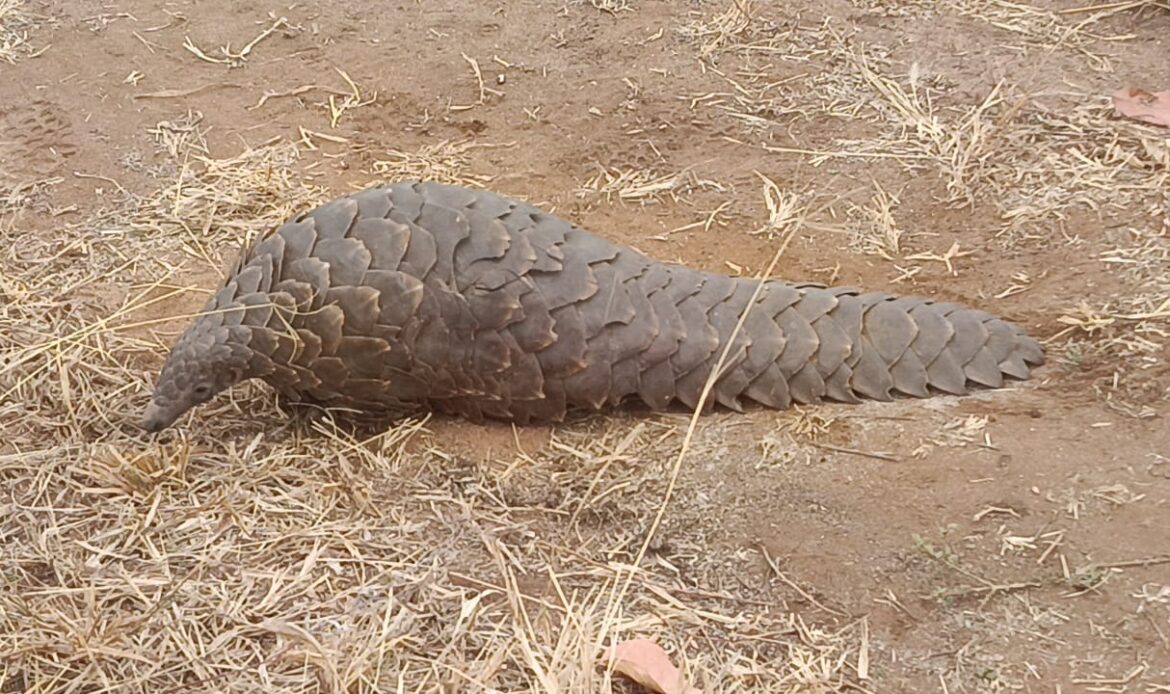
This species is covered in large, overlapping keratin scales—its most famous feature. Adults usually weigh between 6 and 16 kg, though some individuals may be heavier. Their scales range in color from slate-gray to golden brown and provide strong protection against predators. The tail is powerful and nearly as long as the body, helping the animal balance when walking on its hind legs.
Pangolins have no teeth; instead, they catch prey using an extremely long, sticky tongue anchored deep inside the chest. Their eyesight is poor, but their sense of smell is highly developed.
Distribution and Range in Tanzania
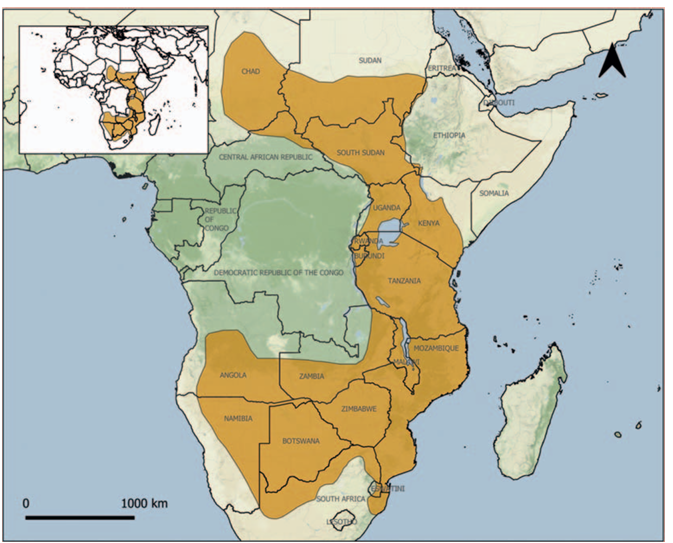
Temminck’s pangolin has a broad yet patchy distribution across Africa, occurring in countries such as Chad, Ethiopia, Kenya, Malawi, Zambia, Namibia, Botswana, Zimbabwe, Mozambique, and South Africa.
In Tanzania, the species is found across many savanna and woodland ecosystems. Sightings and records show it occurs in areas such as:
• Serengeti ecosystem
• Ruaha–Rungwa landscape
• Selous–Niassa corridor
• Miombo woodlands across central and southern Tanzania
Although widespread, it remains difficult to observe due to its secretive and mostly nocturnal behavior. In Tanzania, as elsewhere, the species faces pressure from illegal hunting and trade, especially where law enforcement is limited.
Habitat
Temminck’s pangolin lives in a variety of open habitats, including:
• Savannas
• Mopane and miombo woodlands
• Thorn scrub and thickets
• Floodplains and dry grasslands
• Duneveld and mixed woodland
It does not inhabit rainforests or true deserts. The presence of ants and termites strongly influences where they can live. Pangolins often shelter in abandoned burrows of aardvarks, warthogs, and porcupines, as well as rock crevices and termite mounds.
Ecology
Temminck’s pangolin is a specialist feeder. It eats only ants and termites (over 40 species recorded), using its strong claws to open nests and its long tongue to capture insects. In some regions, a single ant species, Anoplolepis custodiens, makes up most of its diet.
Home range sizes vary widely:
• In some areas: less than 1 km²
• In others: more than 20 km²
Males usually roam farther than females, and young males may travel long distances before settling.
Behavior
Temminck’s pangolin is primarily nocturnal, but in colder regions such as the Kalahari, it may forage during the day in winter.
• Bipedal walking; It walks on its hind legs, using its tail for balance.
• Solitary lifestyle; Adults live alone, coming together only to mate.
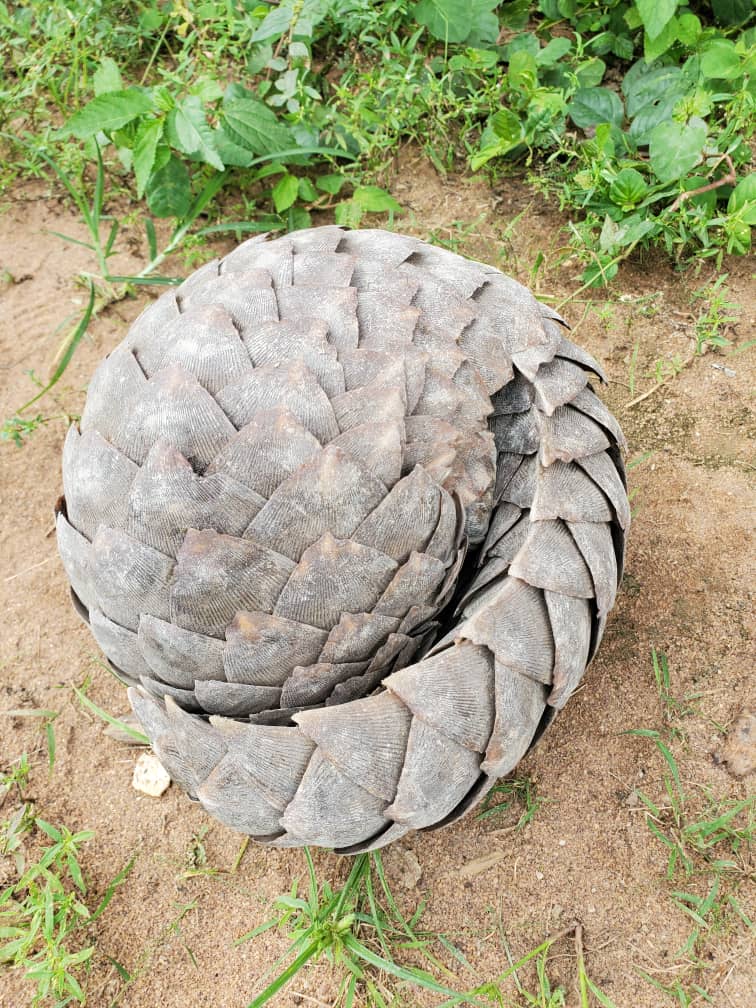
• Defense: When threatened, it rolls into a tight ball that is extremely hard to open.
• Scent-marking; Both sexes use urine, feces, and secretions from anal glands to mark territories.
• Burrow use: It does not dig its own burrows but uses those made by other animals.
Reproduction
Females typically give birth to one young after a gestation period of 105–140 days. The newborn’s scales are soft and pink. Mothers carry their young on the base of the tail and protect them by curling around them when danger appears.
Young become independent between 3–7 months but may remain in the mother’s home range for almost a year before dispersing.
Population
Accurate population estimates are lacking across most of Africa because the species is so secretive. In parts of South Africa and Zimbabwe, densities range from:
• 0.12–0.16 breeding adults per km²
• 0.23–0.31 individuals per km² (total population)
Populations across the continent are believed to be declining.
Status
Temminck’s pangolin is currently listed as Vulnerable (IUCN Red List, 2019)
It is protected under national laws in most range states and is included in CITES Appendix I, which prohibits all international commercial trade.
Threats
The species faces multiple human-driven threats, including:
• Electrocution on electric fences (a major cause of death in southern Africa)
• Poaching for traditional medicine and cultural uses
• Illegal international trafficking of scales
• Habitat loss due to agriculture
• Roadkill
• Accidental capture in traps
TRCO position
The Tanzania Research and Conservation Organization (TRCO) plays a vital role in the research, protection, and long-term conservation of Temminck’s pangolin across the country. TRCO conducts field surveys, ecological studies, and community outreach programs to reduce threats to pangolins and strengthen local awareness. The organization leads a group of professionals and non-professionals across Tanzania that reports real-time pangolin incidents and provides advice on how to respond to them to rescue pangolins from danger.
Through this platform, people share pangolin sightings, rescue information, and emerging threats. TRCO manages a national pangolin database that compiles and securely stores all reported sightings and records, helping scientists track pangolin distribution, monitor population trends, and guide conservation action. TRCO welcomes all Tanzanians and visitors to report any pangolin sightings, injuries, or illegal activities. Anyone who encounters a pangolin can contact TRCO through email or phone, contributing directly to the conservation of this rare and threatened species.
References list
Heath, M. E., & Coulson, I. M. (1997). Home range size and distribution of the ground pangolin (Manis temminckii) in north-western Zimbabwe. African Journal of Ecology, 35(2), 94–109.
Kingdon, J. (1971). East African mammals: An atlas of evolution in Africa. Academic Press.
Pietersen, D. W., Jansen, R., Swart, J., Panaino, W., Kotze, A., Rankin, P., & Nebe, B. (2020). Temminck’s pangolin Smutsia temminckii (). In Pangolins (pp. 175-193). Academic Press.
Pietersen, D. W., McKechnie, A. E., & Jansen, R. (2014). Home range, habitat selection, and activity patterns of Temminck’s ground pangolin (Smutsia temminckii) in South Africa. African Zoology, 49(2), 265–276.
Pietersen, D. W., McKechnie, A. E., & Jansen, R. (2016). Diet and prey selection of Temminck’s pangolin (Smutsia temminckii) in South Africa. Journal of Zoology, 298(3), 198–208.
Pietersen, D., Jansen, R., & Connelly, E. (2019). Smutsia temminckii. The IUCN Red List of Threatened Species 2019: e.T12765A123584478.