

The Tanzania Research and Conservation Organization (TRCO) is working in the Burigi–Minziro landscape in northwestern Tanzania to enhance coexistence between local communities and that elephants in this landscape.
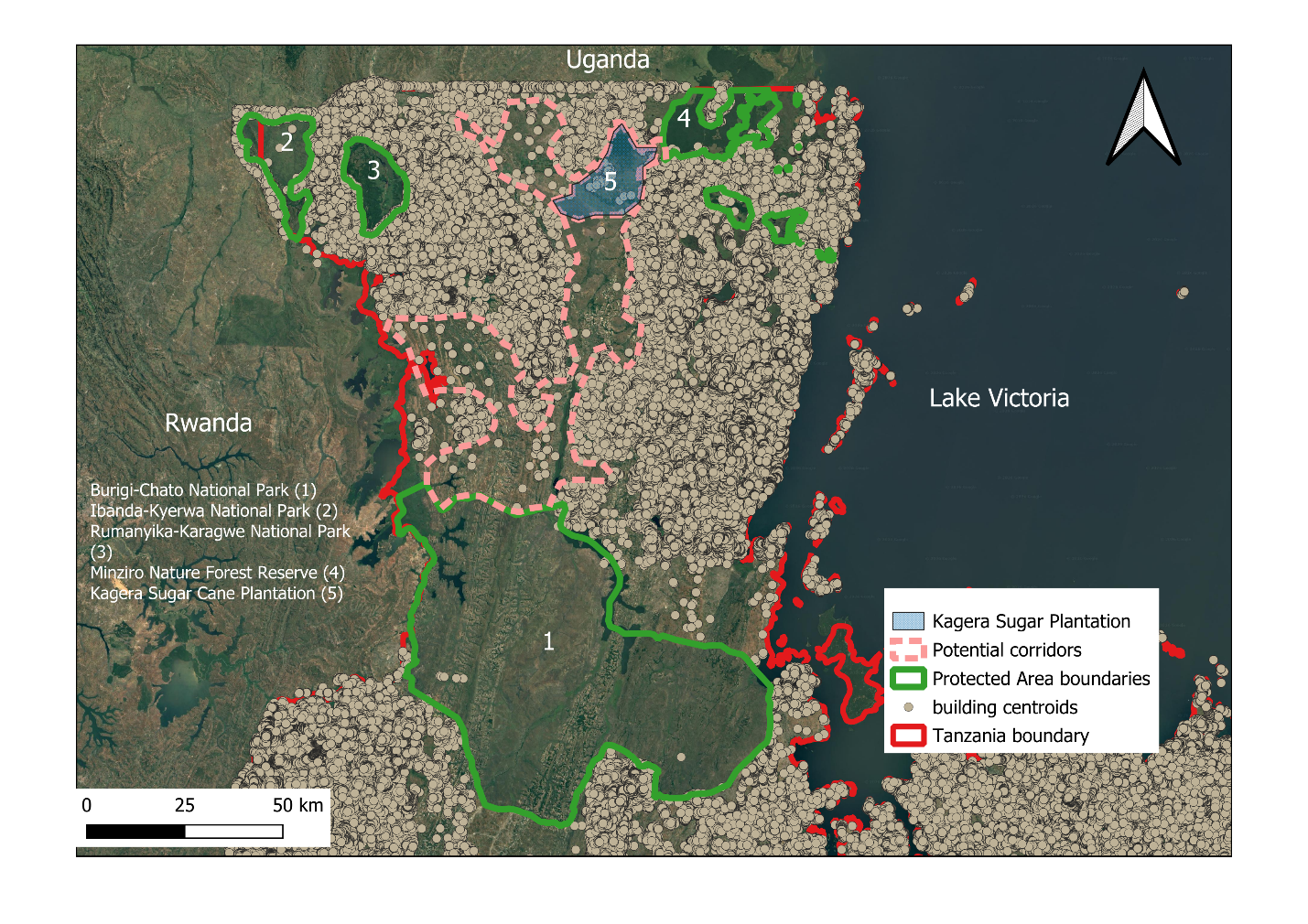
This is a vast landscape with important protected areas, such as Burigi-Chato, Ibanda-Kyerwa, Rumanyika-Karagwe National Parks, and Minziro Nature Forest Reserve. But, despite elephants being known for their ecological, social, and economic importance, little is known about the population of these elephants in Burigi-Minziro landscape.
While the government recently elevated the protected area in this area to a higher status, human activities (e.g., livestock grazing, crop cultivation, and settlement) have been increasing over time in this landscape, which threatens these poorly known elephant populations.
A notable threat in this area is increased human-elephant conflict (HEC), particularly for local communities and plantation investors in the northern part of this landscape, due to habitat fragmentation that has shrunk elephant habitat. This has led some elephant populations to be isolated into small groups and live permanently outside the protected areas.
The government has made a notable effort to relocate the isolated populations back to Burigi-Chato National Park; however, it is well known that any conservation intervention inevitably creates another problem that needs investigation and addressing.
The primary objective of this project is to improve the management of elephants and human-elephant conflict in the Burigi-Minziro landscape. Specific activities include:
- Collect data on elephant movement, abundance, and distribution, human-elephant conflict dynamics, and identify farming systems, crop types, and land-use patterns that may attract elephants and drive human-elephant conflict in the Burigi-Minziro landscape.
- Conduct ecological and landscape assessments on habitat quality, landscape corridors and connectivity, and resource competition between people and elephants.
- Implement strategies for conflict mitigation, such as developing and applying innovative low-cost deterrents and early warning systems, conducting a capacity needs assessment, reviewing and adapting best practices from other landscapes for local relevance, supporting community livelihoods, and conducting awareness and education activities.
Collaborating with Local and International Partners
Preliminary surveys related to human-wildlife conflict and development of initial HEC plan in Burigi-Minziro landscape has been done in collaboration with local organizations (like Tanzania National Parks, Tanzania Wildlife Research Institute, Commission of Science and Technology of Tanzania (COSTECH), local government authorities, Peace for Conservation and Grumeti Fund) and international organizations (like Danish Zoological Society from Denmark, EcoExist from Botswana, and San Diego State University from USA).
Opportunities to Work Together
TRCO welcomes collaboration with organizations and individuals interested in supporting this work.
Potential partners include:
- Research institutions
- Conservation NGOs
- Donor organizations
- Government agencies
- Graduate students and researchers
- Volunteers and interns
Working together helps ensure that conservation science doesn’t stay on paper; it leads to practical action on the ground. For partnership opportunities or funding support, please get in touch with us via info@trco.or.tz. For more information about TRCO and other projects, visit https://trco.or.tz/